Art and Design
At St Edward's, our art and design curriculum is designed to inspire creativity, imagination and self-expression in all pupils. We encourage children to think and work like artists and designers by exploring ideas, experimenting with a range of materials and techniques, and developing the confidence to communicate meaning through their artwork.
Through our curriculum, pupils develop an appreciation of art and design as an important form of human creativity and expression. Children are introduced to a range of artists, styles and cultures, helping them to understand how art has influenced societies throughout history and continues to shape the world around us today. We encourage pupils to value individuality, take creative risks and reflect thoughtfully on both their own work and the work of others.
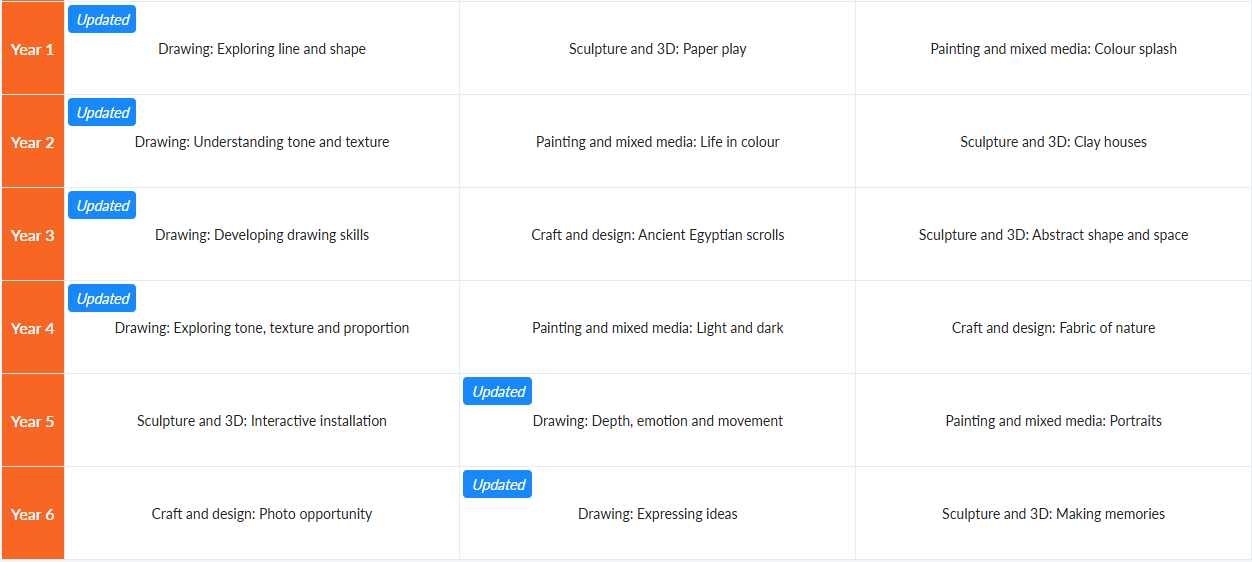
We use the scheme 'Kapow'. This supports teachers in delivering engaging, purposeful and high-quality lessons with confidence, while continuing to strengthen their subject knowledge and expertise. Our curriculum is carefully sequenced to ensure progression in skills and knowledge and is designed to be inclusive, ambitious and accessible so that every child can experience success and enjoyment in art and design.
Art Topics
A Curriculum for Our Children
At St Edward's, we recognise that some pupils face barriers which can impact their access to and engagement with the curriculum. Our art and design curriculum is carefully planned to address these barriers and ensure all children are able to develop confidence, creativity and success as artists.
Vocabulary development is a key focus within our curriculum. We ensure that artistic vocabulary is carefully planned and progressively built upon across year groups and topics. Key vocabulary is displayed within classrooms and included in knowledge organisers so that pupils can confidently access, understand and apply subject-specific language when discussing artwork and creative techniques.
We also place great importance on developing communication and teamwork skills. Oracy opportunities are embedded throughout the curriculum, giving pupils regular opportunities to discuss artists’ work, articulate their ideas, evaluate their creations and respond thoughtfully to the work of others. Through collaborative activities and discussion, children build confidence in expressing themselves creatively and verbally.
Developing resilience is another important aspect of our art and design curriculum. Pupils are encouraged to see art as a process of experimentation, reflection and improvement. Teachers support children in taking creative risks and understanding that mistakes are part of the learning journey. Links to our myHappymind programme help pupils to manage challenges positively and persevere when they encounter difficulties in their learning.
We also recognise that pupils may come to school with differing and sometimes limited life experiences. To broaden pupils’ cultural capital and enrich their understanding of art and design, we provide a wide range of experiences beyond the classroom. These include educational visits to galleries and exhibitions, opportunities to study the work of significant artists first-hand and participation in online learning experiences such as The National Gallery Art School sessions. Through these opportunities, pupils are encouraged to develop curiosity, appreciation and enjoyment of art in the wider world.
A Curriculum for All Children
Accordion content
EYFS
Accordion content
Assessment in Art
At St Edward's, we believe that assessment in art and design should be purposeful, supportive and used to celebrate pupils’ creativity and artistic development. Due to the creative and highly individual nature of the subject, we recognise that art cannot always be quantifiably assessed in the same way as other curriculum areas. Instead, assessment focuses on pupils’ engagement, creative thinking, application of skills and their ability to reflect on and develop their own ideas over time.
Teachers use formative assessment strategies throughout every lesson to observe pupils’ understanding, monitor the development of artistic skills and identify where additional support or challenge may be needed. Assessment folders and tracking grids are used to help teachers monitor participation, progression and coverage across units of work, while also identifying pupils who may have been absent or require further guidance with particular techniques or concepts.
By regularly reviewing this information, teachers are able to adapt future lessons, revisit key skills and provide opportunities for pupils to refine and improve their work. Teachers are also given opportunities to reflect on pupils’ progress in art and design alongside members of the Senior Leadership Team during pupil progress meetings, ensuring assessment is used meaningfully to support creativity, confidence and achievement for all learners.