Science
St Edward's - A caring Christian Community where children achieve their potential, are confident in themselves and their abilities and are set on a positive path for life.
The important thing is to never stop questioning.
Albert Einstein
At St Edward's, our science curriculum aims to inspire pupils to become curious, inquisitive and analytical learners who develop a broad understanding of the world around them. Through engaging and practical experiences, pupils are encouraged to think like scientists by asking questions, making observations, carrying out investigations and presenting their findings in a variety of ways.
We aim to develop pupils’ understanding of how science impacts everyday life and shapes the world we live in, helping them to become reflective and responsible individuals who can use their scientific knowledge to make informed choices. Our curriculum is carefully designed to be ambitious, inclusive and accessible to all learners, ensuring every child can participate fully and achieve their potential.
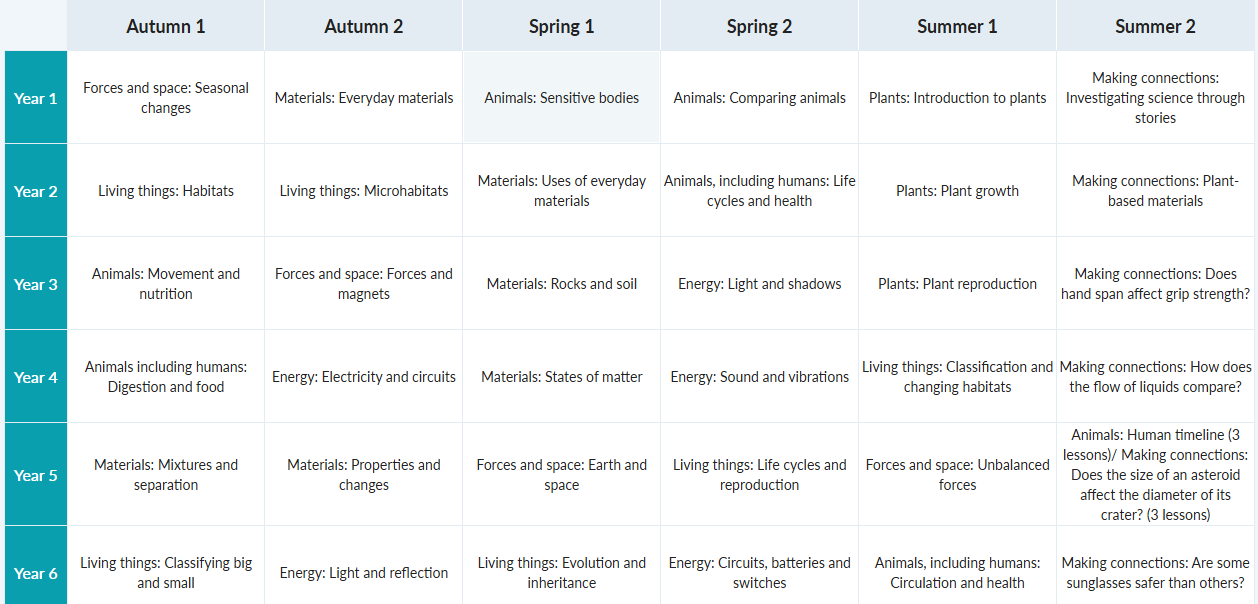
We use a scheme of work called Kapow which supports teachers to deliver engaging, high-quality science lessons with confidence, while continuing to develop their own subject knowledge and expertise.
Accordion Title
EYFS
In Reception, children learn about plants, the seasons, animals, senses and simple life-cycles. They learn about how we grow and change.
There is an 'Investigation Area' in which children can explore and use scientific language. This prepares children for scientific enquiry later in school.
We encourage children to ask questions about the world around them and to make scientific observations. Stories are used to develop children's scientific knowledge. For example, Once There Were Giants is used to look at how we grow and change. Jack and the Beanstalk is used to support learning about plants.
A curriculum for our children
We have identified some core barriers that the children of our school face when they are accessing the curriculum, and we intend to deliver the geography curriculum with an approach that addresses these:
- Vocabulary – we ensure that our topics are planned with careful and deliberate vocabulary progression. Teacher documents list the ‘retrieval vocabulary’ and new vocabulary associated with each unit of work. Children know this vocabulary is displayed in their classroom and also have access to it in the knowledge organisers in their books.
- Communication and teamwork skills –Oracy opportunities are embedded in medium-term planning and science debates are encouraged across the school. Teachers use the ‘Talk like a Scientist’ stem sentences within classrooms to encourage children to speak using scientific language. Pupils need opportunities in lessons to recap and orally rehease their thoughts using scientific language so they can use this language clearly and precisely.
- Resilience – we use scientific enquiry to build resilience and discuss the importance of incorrect results. Children are expected to develop resilience through repeating experiments so that they are fair.
- Differing and sometimes limited life experiences – We offer a curriculum of breadth and wider opportunity. We provide children with opportunities to expand their knowledge and experience of science beyond the classroom through: assemblies celebrating science; trips out of school to support units of learning; visitors coming in to discuss scientific concepts with the children to enhance learning; School ecocouncil information and activities.
A Curriculum for All Children
Ambition
Our ambition in Science for our children who have SEND is broadly in line with our ambitions for all pupils.
We believe it is important that we recognise that a child’s scientific ability and enquiring mind is not directly related to their reading, writing or maths attainment level. A child who experiences difficulties with reading, for example, might excel at recognising and explaining the effect of friction on a moving object. They should be given every opportunity to excel in this subject regardless of barriers. Albert Einstein, Thomas Edison and Steven Hawkins are just a few famous scientists who are believed to have been dyslexic.
Access (How we ensure all children can access and succeed in Science)
-
Revisit and revise prior knowledge regularly - First part of every lesson used to revise knowledge and key vocabulary from prior sessions.
-
Child friendly knowledge organisers are being developed for all children to keep in their science books for reference throughout a unit of work. This will help to remind them of key vocabulary and knowledge.
-
Children to work in mixed attainment groups when conducting scientific investigations with teacher/TA overseeing groups and offering assistance when required.
-
When writing up investigations, children may be supplied with scaffolded summaries if necessary.
-
Classroom displays / working walls are used as visual prompts; they include facts, images, key vocabulary and child friendly definitions.
Science Pedagogy
Science is taught through whole-class interactive teaching, where the focus is on all children working together on the same lesson content, whilst at the same time challenging and supporting pupils to gain depth of understanding.
Teachers consider their pupils’ understanding in the context of a ‘whole-school’ journey as opposed to simply focusing on their year-group objectives. Prior learning is frequently referred to and revisited.
We know that teacher-directed science instruction is positively associated with science performance, so teachers take a clear lead with explanation of scientific ideas.
A small-steps approach is taken where possible – teachers break down scientific learning into as small chunks as possible with the aim of eliminating misconceptions and highlighting areas of difficulty.
We are aware that formative assessment is most effective when embedded within a lesson sequence. Where misconceptions come to light, teachers explore these with children through whole class discussion. Great care is taken to ensure that children do not carry these misconceptions forward. Feedback is continually used to move children on with their learning. Any feedback given is purposeful. Children are fully involved in discussions about the learning process and are therefore aware of what scientific content they have covered, are encouraged to frequently make links back to prior knowledge about geography, and are quizzed about sticky knowledge regularly.
Staff make it a priority to deliberately expand children’s vocabulary by repeated and deliberate exposure to language allocated to that year group, and provide opportunities for children to experiment with that language. All classrooms are language rich – children are given many opportunities to talk and sentence stems are modelled and used. Teachers carefully consider when to introduce geographical vocabulary at the planning stage, and are aware of what vocabulary the children have used in previous year groups.
It is important that teachers have both content knowledge and pedagogical content knowledge in order to deliver high quality lessons. We ensure that teachers have access to subject specific CPD so that they can deliver content confidently.
Resources
School has a central resource bank of resources for each year group to access. ICT is used across the school to support learning in Science, for example researching scientists and constructing graphs. Classroom displays reflect current learning and are functional so are regularly referred to and used by pupils and adults within class.
Science Assessment
At St Edward's, we believe that assessment in science should be purposeful, manageable and valuable in informing future teaching and learning. Teachers use formative assessment strategies throughout every lesson to check pupils’ understanding, identify misconceptions and adapt teaching to meet pupils’ needs. In addition, teachers use assessment folders containing carefully designed grids to monitor pupils’ understanding across lessons and units of work. These grids enable teachers to identify pupils who may have been absent, experienced difficulty with scientific concepts or require further support and reinforcement.
By regularly tracking this information, teachers can identify patterns and misconceptions, allowing them to revisit key learning, adapt future lessons and plan effective next steps to ensure all pupils make progress in science. Teachers are also given opportunities to reflect on pupils’ progress in science alongside members of the Senior Leadership Team during pupil progress meetings, ensuring assessment information is used effectively to support achievement for all learners.